
A good family tree search by name page should solve a real research problem instead of sending visitors through a long list of databases. This guide focuses on solving the same-name problem by turning a name into a structured identity search. The objective is to help you move from a clue to a defensible conclusion while keeping your research organized, transparent, and respectful of privacy.
A family tree search by name begins with a person’s name but does not stop there. Names are useful entry points, yet they are rarely unique. The strongest searches combine the name with time, place, relationships, and life events so that the result represents the same person across several records.
The most important habit is simple: treat every search result as a clue until you have compared it with the rest of the person’s life. Names repeat. Dates shift. Places are recorded at different levels of detail. Family stories can be partly right and partly wrong. A careful family tree search by name workflow makes room for uncertainty and records why a relationship was accepted rather than merely copying it from somewhere else.
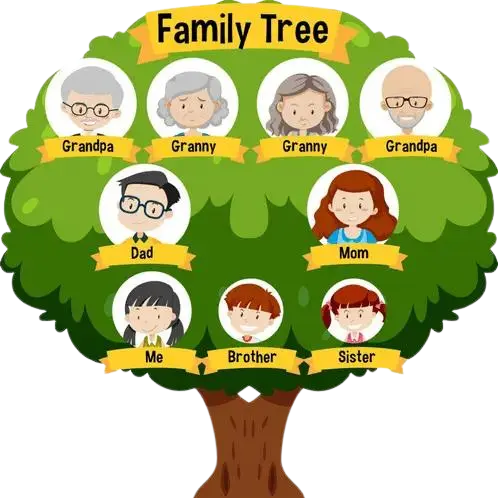
Most visitors arrive with one of four needs: they want to identify a person, confirm whether two people are the same individual, connect one generation to the next, or understand why a search is returning confusing results. The page should therefore give users a search strategy before it gives them a long explanation of genealogy theory.
A productive family tree search by name begins with a small identity profile. Write down what you know, even if some details are approximate. Include names, alternate names, dates, locations, spouses, parents, children, occupations, religion, military service, migration, and any distinctive event. Then search with only the strongest pieces of information first. Add filters gradually. If you add every detail at once, one incorrect family memory or mistranscribed date can hide the correct record.
The goal is not to force a database to return one perfect answer. It is to create a group of plausible candidates and eliminate the wrong ones through comparison. This approach is especially important for common surnames, people who moved frequently, immigrants whose names changed in spelling, women who used multiple surnames, and families that reused first names across generations.

Use broad searches first. Historical records were created by different people for different purposes, so spelling, age, and place can vary. Add filters one at a time and note which change improved or reduced the results.
Treat this as a deliberate research action rather than a box to check. Write down what you learned, what remains uncertain, and what the next record or tool should help you answer.
Treat this as a deliberate research action rather than a box to check. Write down what you learned, what remains uncertain, and what the next record or tool should help you answer.
Treat this as a deliberate research action rather than a box to check. Write down what you learned, what remains uncertain, and what the next record or tool should help you answer.
Treat this as a deliberate research action rather than a box to check. Write down what you learned, what remains uncertain, and what the next record or tool should help you answer.
Use broad searches first. Historical records were created by different people for different purposes, so spelling, age, and place can vary. Add filters one at a time and note which change improved or reduced the results.
Source or input | What it can help with | What to check |
Census Households | Household structure, age, birthplace, residence, occupation, migration clues | Ages and birthplaces can vary; early schedules may provide limited household detail |
Marriage Licenses | Spouse, maiden name, residence, parents, witnesses, prior marital status | Applications, licenses, and returns can contain different information |
Birth And Baptism Records | Birth date/place, parents, maiden names, sponsors or family context | Civil registration dates and access rules vary by jurisdiction |
Death Records | Death, burial, relatives, spouse, parents, residence, biography clues | Parent or birth details may be secondhand; memorials can contain user-submitted data |
City Directories | Identity, relationship, residence, timeline, or contextual evidence | Evaluate who created the source, when, and whether the information is firsthand |
Obituaries | Death, burial, relatives, spouse, parents, residence, biography clues | Parent or birth details may be secondhand; memorials can contain user-submitted data |
Mistake 1: Assuming exact spelling is required. The fix is to slow down and test the assumption against the person’s whole identity. Add or remove search filters, compare independent records, and keep a note explaining why the revised conclusion is stronger. A good family tree search by name process makes uncertainty visible instead of hiding it.
Mistake 2: Using punctuation or middle names that were not consistently recorded. The fix is to slow down and test the assumption against the person’s whole identity. Add or remove search filters, compare independent records, and keep a note explaining why the revised conclusion is stronger. A good family tree search by name process makes uncertainty visible instead of hiding it.
Mistake 3: Ignoring women’s maiden and married surnames. The fix is to slow down and test the assumption against the person’s whole identity. Add or remove search filters, compare independent records, and keep a note explaining why the revised conclusion is stronger. A good family tree search by name process makes uncertainty visible instead of hiding it.
Mistake 4: Rejecting a result because the age differs by one or two years. The fix is to slow down and test the assumption against the person’s whole identity. Add or remove search filters, compare independent records, and keep a note explaining why the revised conclusion is stronger. A good family tree search by name process makes uncertainty visible instead of hiding it.
Mistake 5: Accepting a same-name result without checking relatives and residence. The fix is to slow down and test the assumption against the person’s whole identity. Add or remove search filters, compare independent records, and keep a note explaining why the revised conclusion is stronger. A good family tree search by name process makes uncertainty visible instead of hiding it.
For “William Henry Brown,” search William H Brown, W H Brown, Will Brown, and William Brown. If he was born about 1882 in Kentucky and later lived in Indiana with a wife named Clara, those details can separate him from dozens of other William Browns. A city directory might then connect his occupation and address to the census household.
The lesson is not that one particular record type is always best. It is that a strong family tree search by name result is built from a chain of consistent evidence. If one source contradicts the others, keep the conflict in your notes and search for a record created closer to the event or by a better-informed person. Genealogy becomes more reliable when you can explain why one interpretation fits the evidence better than another.
When a family tree search by name stalls, search sideways. Look for siblings, spouses, children, witnesses, neighbors, business partners, church sponsors, and travel companions. Genealogists often call this cluster research because people rarely lived in isolation. A difficult ancestor may be easier to identify through someone close to them.
Build a timeline with one row per event. Include the date, place, source, name spelling, age, occupation, family members, and address. Timelines expose impossible overlaps, such as a person appearing in two distant places at the same time, and they reveal gaps that suggest the next record to search.
Search geography, not just names. County boundaries changed, churches served several communities, hospitals drew patients from surrounding areas, and couples sometimes crossed jurisdictional lines to marry. If a record should exist but does not appear, check neighboring counties, parent jurisdictions, and the correct record-keeping office for that year.
Finally, keep a negative-search log. Record the database or repository, collection, date range, filters, and result. A failed family tree search by name is still useful information because it prevents you from repeating the same search and can show when your assumptions about place or date need revision.
This page should make it clear that family tree search by name results are research leads unless they are supported by evidence. Do not claim access to record collections that the site does not actually license or index. When a user is directed to another archive or database, label the destination clearly.
For U.S. research, the National Archives is an authoritative starting point for federal genealogy records and explains that census, military, immigration, naturalization, and land records are among its most commonly used genealogy holdings. It also explains that ordinary birth, death, marriage, and divorce records are generally state or local records rather than federal holdings. FamilySearch provides useful guidance on searching historical records with names, dates, places, and relationships. For GEDCOM-related pages, the FamilySearch GEDCOM 7 specification should be treated as a technical reference.
Recommended editorial practice: add a visible “Last reviewed” date, identify the author or reviewer, cite official repositories for factual claims, and maintain a correction policy. If a page discusses living people, include a privacy reminder and avoid exposing addresses, full birth dates, phone numbers, or other unnecessary personal information.
Start with it, but do not depend on it. Historical records often shorten, misspell, translate, or omit names. A flexible search is usually more productive.
Search by first name, spouse, children, residence, marriage place, and approximate dates. Marriage, obituary, death, and children’s records may reveal the maiden surname.
Search the formal and informal versions. Also search initials and surname-only combinations with relatives or places.
Ages in historical records can be estimates, rounded, misremembered, or incorrectly transcribed. Use a range and compare multiple facts.
Yes, but it works best when you add a place, time period, or relative. Common surnames can produce too many results without another filter.
There is no fixed number. The goal is a coherent identity supported by independent evidence. One perfect-looking match is weaker than several records that agree on family, place, and timeline.