
A good online family tree maker page should solve a real research problem instead of sending visitors through a long list of databases. This guide focuses on helping users evaluate and use an online builder while clearly separating the generic tool category from the Family Tree Maker software trademark. The objective is to help you move from a clue to a defensible conclusion while keeping your research organized, transparent, and respectful of privacy.
An online family tree maker is a browser-based tool for creating people, relationships, events, sources, notes, and family-tree views. It should let you edit the tree over time and ideally offer privacy controls, backup or export options, and a clear way to distinguish documented facts from unverified information.
The most important habit is simple: treat every search result as a clue until you have compared it with the rest of the person’s life. Names repeat. Dates shift. Places are recorded at different levels of detail. Family stories can be partly right and partly wrong. A careful online family tree maker workflow makes room for uncertainty and records why a relationship was accepted rather than merely copying it from somewhere else.
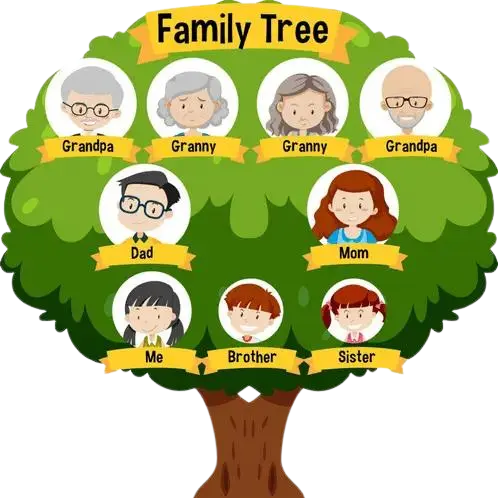
A useful online family tree maker experience should make family relationships understandable without hiding the research behind them. The visual tree is only one layer. Under each person should be structured facts, relationship types, notes, sources, and privacy controls. That separation matters because a beautiful chart can still contain an incorrect parent, duplicate spouse, or guessed date.
Before choosing or using a tool, decide whether you are primarily researching, presenting, collaborating, or printing. Research requires source citations and flexible editing. Presentation requires readable layouts. Collaboration requires permissions and change awareness. Printing requires export quality. A strong online family tree maker workflow may use the same underlying data for several different outputs instead of rebuilding the family from scratch each time.
Portability also matters. Keep a backup outside the working platform when possible. GEDCOM remains a widely used exchange format for core genealogical data, although applications can differ in how they handle media, notes, extensions, and platform-specific features. The FamilySearch GEDCOM 7 specification is a useful technical reference for developers and advanced users.

Begin with information you can explain and, when possible, document. A known relative, known place, or known file gives you an anchor. Avoid building the next step on a guess because every later conclusion will inherit that uncertainty.
Treat this as a deliberate research action rather than a box to check. Write down what you learned, what remains uncertain, and what the next record or tool should help you answer.
Treat this as a deliberate research action rather than a box to check. Write down what you learned, what remains uncertain, and what the next record or tool should help you answer.
Treat this as a deliberate research action rather than a box to check. Write down what you learned, what remains uncertain, and what the next record or tool should help you answer.
Capture the source while you are looking at it. Record enough information to find it again and note what the source actually says. Separating transcription from interpretation helps prevent later confusion.
Treat this as a deliberate research action rather than a box to check. Write down what you learned, what remains uncertain, and what the next record or tool should help you answer.
Comparison is where a plausible match becomes useful evidence. Look across several facts at once and ask whether the entire timeline makes sense. One matching date should not outweigh a conflicting spouse, residence, or parent.
Treat this as a deliberate research action rather than a box to check. Write down what you learned, what remains uncertain, and what the next record or tool should help you answer.
Source or input | What it can help with | What to check |
Source Citations | Identity, relationship, residence, timeline, or contextual evidence | Evaluate who created the source, when, and whether the information is firsthand |
Family Photographs | Identity, relationship, residence, timeline, or contextual evidence | Evaluate who created the source, when, and whether the information is firsthand |
Certificates | Identity, relationship, residence, timeline, or contextual evidence | Evaluate who created the source, when, and whether the information is firsthand |
Census Images | Household structure, age, birthplace, residence, occupation, migration clues | Ages and birthplaces can vary; early schedules may provide limited household detail |
Obituaries | Death, burial, relatives, spouse, parents, residence, biography clues | Parent or birth details may be secondhand; memorials can contain user-submitted data |
Research Notes | Identity, relationship, residence, timeline, or contextual evidence | Evaluate who created the source, when, and whether the information is firsthand |
Mistake 1: Choosing a tool only because it looks attractive. The fix is to slow down and test the assumption against the person’s whole identity. Add or remove search filters, compare independent records, and keep a note explaining why the revised conclusion is stronger. A good online family tree maker process makes uncertainty visible instead of hiding it.
Mistake 2: Ignoring export and backup options. The fix is to slow down and test the assumption against the person’s whole identity. Add or remove search filters, compare independent records, and keep a note explaining why the revised conclusion is stronger. A good online family tree maker process makes uncertainty visible instead of hiding it.
Mistake 3: Making living profiles public by default. The fix is to slow down and test the assumption against the person’s whole identity. Add or remove search filters, compare independent records, and keep a note explaining why the revised conclusion is stronger. A good online family tree maker process makes uncertainty visible instead of hiding it.
Mistake 4: Assuming automated hints are proven facts. The fix is to slow down and test the assumption against the person’s whole identity. Add or remove search filters, compare independent records, and keep a note explaining why the revised conclusion is stronger. A good online family tree maker process makes uncertainty visible instead of hiding it.
Mistake 5: Merging duplicate people without comparing dates and relatives. The fix is to slow down and test the assumption against the person’s whole identity. Add or remove search filters, compare independent records, and keep a note explaining why the revised conclusion is stronger. A good online family tree maker process makes uncertainty visible instead of hiding it.
A useful online family tree maker should let you create a profile for “Eleanor Davis,” connect her to two parents and a spouse, attach a 1940 census source, mark an estimated birth date, and keep a living grandchild private. If the tool can export the core tree as GEDCOM, you also have a path to move your research later.
The lesson is not that one particular record type is always best. It is that a strong online family tree maker result is built from a chain of consistent evidence. If one source contradicts the others, keep the conflict in your notes and search for a record created closer to the event or by a better-informed person. Genealogy becomes more reliable when you can explain why one interpretation fits the evidence better than another.
A online family tree maker should support revision. Genealogy data changes as new evidence appears, so avoid workflows that turn a chart into an uneditable picture too early. Maintain a research version with full names, sources, notes, relationship types, and uncertainty. Create simplified printable or shareable versions from that research tree.
Use consistent data entry. Put surnames in the same format, preserve maiden names, standardize place names without erasing the historical place, and distinguish exact dates from estimates. If the software supports source citations, attach them to the facts they support instead of dropping a long source list into a general notes field.
Plan for complex families. Multiple marriages, adoption, step relationships, guardianship, unknown parents, and nontraditional family structures require flexible relationship modeling. Do not force the family into a template that changes the facts simply to keep the chart symmetrical.
Keep a backup strategy. Export periodically, preserve media originals separately, and document which software created the file. A online family tree maker is more valuable when your family can still open, understand, and migrate the data years later.
This page should make it clear that online family tree maker results are research leads unless they are supported by evidence. Do not claim access to record collections that the site does not actually license or index. When a user is directed to another archive or database, label the destination clearly.
For U.S. research, the National Archives is an authoritative starting point for federal genealogy records and explains that census, military, immigration, naturalization, and land records are among its most commonly used genealogy holdings. It also explains that ordinary birth, death, marriage, and divorce records are generally state or local records rather than federal holdings. FamilySearch provides useful guidance on searching historical records with names, dates, places, and relationships. For GEDCOM-related pages, the FamilySearch GEDCOM 7 specification should be treated as a technical reference.
Recommended editorial practice: add a visible “Last reviewed” date, identify the author or reviewer, cite official repositories for factual claims, and maintain a correction policy. If a page discusses living people, include a privacy reminder and avoid exposing addresses, full birth dates, phone numbers, or other unnecessary personal information.
No. “Online family tree maker” is a generic description of a web-based tree-building tool. Family Tree Maker is also the name of a specific genealogy software product, so brand references should be clearly distinguished.
Many services offer a free tier or free basic tree creation, while advanced records, storage, matching, or reports may require payment.
Some platforms support invitations and collaboration. Use role-based access where possible and agree on how changes and sources will be handled.
Check privacy controls, export options, source support, mobile usability, collaboration, duplicate handling, chart views, and account-deletion or data-export policies.
Many genealogy tools support GEDCOM import, but implementation varies. Always keep the original file and review relationships, notes, sources, and media after import.
Use private-tree settings, restrict collaborators, avoid publishing full birth dates and contact details, and follow the consent preferences of the people involved.