
A good family tree search page should solve a real research problem instead of sending visitors through a long list of databases. This guide focuses on helping a beginner move from a name to a documented family line without treating the first online match as proof. The objective is to help you move from a clue to a defensible conclusion while keeping your research organized, transparent, and respectful of privacy.
A family tree search is the process of looking for a person, connecting that person to relatives, and testing each connection against reliable historical evidence. A useful search goes beyond matching names. It combines names with dates, places, relationships, occupations, residences, and record types so that two people with similar names are less likely to be confused.
The most important habit is simple: treat every search result as a clue until you have compared it with the rest of the person’s life. Names repeat. Dates shift. Places are recorded at different levels of detail. Family stories can be partly right and partly wrong. A careful family tree search workflow makes room for uncertainty and records why a relationship was accepted rather than merely copying it from somewhere else.
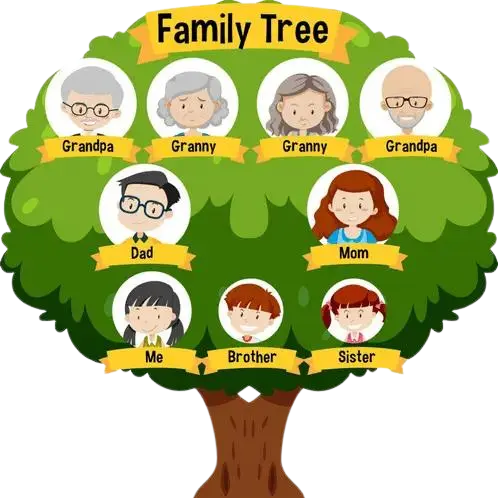
Most visitors arrive with one of four needs: they want to identify a person, confirm whether two people are the same individual, connect one generation to the next, or understand why a search is returning confusing results. The page should therefore give users a search strategy before it gives them a long explanation of genealogy theory.
A productive family tree search begins with a small identity profile. Write down what you know, even if some details are approximate. Include names, alternate names, dates, locations, spouses, parents, children, occupations, religion, military service, migration, and any distinctive event. Then search with only the strongest pieces of information first. Add filters gradually. If you add every detail at once, one incorrect family memory or mistranscribed date can hide the correct record.
The goal is not to force a database to return one perfect answer. It is to create a group of plausible candidates and eliminate the wrong ones through comparison. This approach is especially important for common surnames, people who moved frequently, immigrants whose names changed in spelling, women who used multiple surnames, and families that reused first names across generations.

Begin with information you can explain and, when possible, document. A known relative, known place, or known file gives you an anchor. Avoid building the next step on a guess because every later conclusion will inherit that uncertainty.
Treat this as a deliberate research action rather than a box to check. Write down what you learned, what remains uncertain, and what the next record or tool should help you answer.
Use broad searches first. Historical records were created by different people for different purposes, so spelling, age, and place can vary. Add filters one at a time and note which change improved or reduced the results.
Comparison is where a plausible match becomes useful evidence. Look across several facts at once and ask whether the entire timeline makes sense. One matching date should not outweigh a conflicting spouse, residence, or parent.
Capture the source while you are looking at it. Record enough information to find it again and note what the source actually says. Separating transcription from interpretation helps prevent later confusion.
Capture the source while you are looking at it. Record enough information to find it again and note what the source actually says. Separating transcription from interpretation helps prevent later confusion
Source or input | What it can help with | What to check |
Census Records | Household structure, age, birthplace, residence, occupation, migration clues | Ages and birthplaces can vary; early schedules may provide limited household detail |
Birth And Baptism Records | Birth date/place, parents, maiden names, sponsors or family context | Civil registration dates and access rules vary by jurisdiction |
Marriage Records | Spouse, maiden name, residence, parents, witnesses, prior marital status | Applications, licenses, and returns can contain different information |
Death Certificates And Obituaries | Death, burial, relatives, spouse, parents, residence, biography clues | Parent or birth details may be secondhand; memorials can contain user-submitted data |
Military And Draft Records | Service, unit, residence, age, spouse, dependents, affidavits, benefits | Holdings depend on conflict, branch, service type, date, and repository |
Immigration And Naturalization Files | Origin, arrival, residence, nationality, destination, relatives, citizenship clues | Names and fields vary by era; arrival and naturalization are different events |
Mistake 1: Assuming every same-name result belongs to your family. The fix is to slow down and test the assumption against the person’s whole identity. Add or remove search filters, compare independent records, and keep a note explaining why the revised conclusion is stronger. A good family tree search process makes uncertainty visible instead of hiding it.
Mistake 2: Using an exact birth year when the year is only estimated. The fix is to slow down and test the assumption against the person’s whole identity. Add or remove search filters, compare independent records, and keep a note explaining why the revised conclusion is stronger. A good family tree search process makes uncertainty visible instead of hiding it.
Mistake 3: Ignoring maiden names, initials, spelling changes, and translated names. The fix is to slow down and test the assumption against the person’s whole identity. Add or remove search filters, compare independent records, and keep a note explaining why the revised conclusion is stronger. A good family tree search process makes uncertainty visible instead of hiding it.
Mistake 4: Copying another public tree without checking its sources. The fix is to slow down and test the assumption against the person’s whole identity. Add or remove search filters, compare independent records, and keep a note explaining why the revised conclusion is stronger. A good family tree search process makes uncertainty visible instead of hiding it.
Mistake 5: Jumping backward several generations before proving the parent-child link. The fix is to slow down and test the assumption against the person’s whole identity. Add or remove search filters, compare independent records, and keep a note explaining why the revised conclusion is stronger. A good family tree search process makes uncertainty visible instead of hiding it.
Suppose you are looking for a John Miller who lived in Ohio around 1910. A name-only search may return hundreds of people. Add an approximate birth year, the name of a spouse, and the county where a child was born. Then compare the 1910 census household with a marriage record and a later death record. If the spouse, occupation, residence, and children line up across independent sources, the case becomes much stronger than a single name match.
The lesson is not that one particular record type is always best. It is that a strong family tree search result is built from a chain of consistent evidence. If one source contradicts the others, keep the conflict in your notes and search for a record created closer to the event or by a better-informed person. Genealogy becomes more reliable when you can explain why one interpretation fits the evidence better than another.
When a family tree search stalls, search sideways. Look for siblings, spouses, children, witnesses, neighbors, business partners, church sponsors, and travel companions. Genealogists often call this cluster research because people rarely lived in isolation. A difficult ancestor may be easier to identify through someone close to them.
Build a timeline with one row per event. Include the date, place, source, name spelling, age, occupation, family members, and address. Timelines expose impossible overlaps, such as a person appearing in two distant places at the same time, and they reveal gaps that suggest the next record to search.
Search geography, not just names. County boundaries changed, churches served several communities, hospitals drew patients from surrounding areas, and couples sometimes crossed jurisdictional lines to marry. If a record should exist but does not appear, check neighboring counties, parent jurisdictions, and the correct record-keeping office for that year.
Finally, keep a negative-search log. Record the database or repository, collection, date range, filters, and result. A failed family tree search is still useful information because it prevents you from repeating the same search and can show when your assumptions about place or date need revision.
This page should make it clear that family tree search results are research leads unless they are supported by evidence. Do not claim access to record collections that the site does not actually license or index. When a user is directed to another archive or database, label the destination clearly.
For U.S. research, the National Archives is an authoritative starting point for federal genealogy records and explains that census, military, immigration, naturalization, and land records are among its most commonly used genealogy holdings. It also explains that ordinary birth, death, marriage, and divorce records are generally state or local records rather than federal holdings. FamilySearch provides useful guidance on searching historical records with names, dates, places, and relationships. For GEDCOM-related pages, the FamilySearch GEDCOM 7 specification should be treated as a technical reference.
Recommended editorial practice: add a visible “Last reviewed” date, identify the author or reviewer, cite official repositories for factual claims, and maintain a correction policy. If a page discusses living people, include a privacy reminder and avoid exposing addresses, full birth dates, phone numbers, or other unnecessary personal information.
Yes. Many useful genealogy resources are free, including public archives, libraries, cemetery databases, local historical societies, and some large genealogy platforms. Paid collections can add convenience or records that are not freely indexed, but a careful researcher can make substantial progress with free sources.
A full name is helpful, but a rough date and place are often more valuable than people expect. A spouse, parent, sibling, child, occupation, religion, military unit, or residence can distinguish people with the same name.
The record may use a different spelling, nickname, maiden name, transcription, jurisdiction, or date. Try wider date ranges, fewer filters, alternate spellings, nearby counties, and searches for relatives.
Look for a cluster of matching facts rather than one detail. Dates, places, relatives, occupations, addresses, witnesses, and later records should make sense together.
No. Public trees are leads, not automatic proof. Treat each relationship as a hypothesis until it is supported by records or well-documented research.
Save the record title, collection, date, place, repository or website, image or page number when available, and a note explaining what the record proves or suggests.