A good genealogy for beginners page should solve a real research problem instead of sending visitors through a long list of databases. This guide focuses on a complete onboarding guide that teaches method, source evaluation, organization, and privacy before recommending databases. The objective is to help you move from a clue to a defensible conclusion while keeping your research organized, transparent, and respectful of privacy.
Genealogy for beginners is easiest when you treat family history as a series of small research questions. Start with what you know, document one generation at a time, search records that can answer a specific question, and write down where each fact came from. This method is slower than copying a large online tree, but far more reliable.
The most important habit is simple: treat every search result as a clue until you have compared it with the rest of the person’s life. Names repeat. Dates shift. Places are recorded at different levels of detail. Family stories can be partly right and partly wrong. A careful genealogy for beginners workflow makes room for uncertainty and records why a relationship was accepted rather than merely copying it from somewhere else.
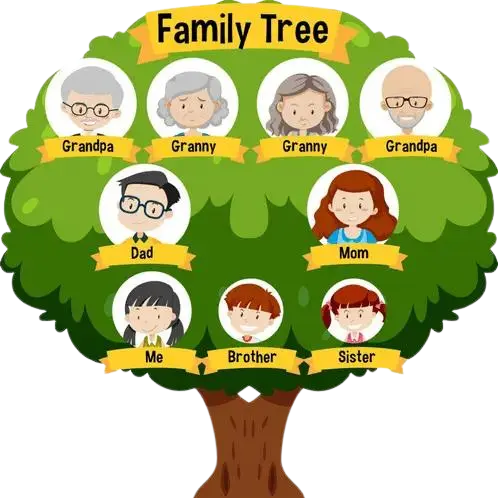
The strongest genealogy for beginners method begins with the known and works toward the unknown. The National Archives teaches the same principle: start with yourself, collect names, dates, places, and relationships, then move backward generation by generation. This prevents a common beginner error—finding an attractive online tree and attaching several generations before the first parent-child relationship has been verified.
Think of your tree as a research workspace, not a finished product. Use approximate dates when the evidence is approximate, preserve conflicting information, keep notes about searches that failed, and cite the sources that support each major conclusion. Good organization reduces repeated work and makes it easier for relatives or future researchers to understand how you reached an answer.

Begin with information you can explain and, when possible, document. A known relative, known place, or known file gives you an anchor. Avoid building the next step on a guess because every later conclusion will inherit that uncertainty.
Treat this as a deliberate research action rather than a box to check. Write down what you learned, what remains uncertain, and what the next record or tool should help you answer.
Capture the source while you are looking at it. Record enough information to find it again and note what the source actually says. Separating transcription from interpretation helps prevent later confusion.
Begin with information you can explain and, when possible, document. A known relative, known place, or known file gives you an anchor. Avoid building the next step on a guess because every later conclusion will inherit that uncertainty.
Treat this as a deliberate research action rather than a box to check. Write down what you learned, what remains uncertain, and what the next record or tool should help you answer.
Use broad searches first. Historical records were created by different people for different purposes, so spelling, age, and place can vary. Add filters one at a time and note which change improved or reduced the results.
Capture the source while you are looking at it. Record enough information to find it again and note what the source actually says. Separating transcription from interpretation helps prevent later confusion.
Privacy is part of responsible family history. Keep sensitive details about living people out of public charts and profiles unless you have permission and a clear reason to share them.
Source or input | What it can help with | What to check |
Home Sources | Identity, relationship, residence, timeline, or contextual evidence | Evaluate who created the source, when, and whether the information is firsthand |
Census Records | Household structure, age, birthplace, residence, occupation, migration clues | Ages and birthplaces can vary; early schedules may provide limited household detail |
Birth And Marriage Records | Birth date/place, parents, maiden names, sponsors or family context | Civil registration dates and access rules vary by jurisdiction |
Death Records And Obituaries | Death, burial, relatives, spouse, parents, residence, biography clues | Parent or birth details may be secondhand; memorials can contain user-submitted data |
Church Records | Identity, relationship, residence, timeline, or contextual evidence | Evaluate who created the source, when, and whether the information is firsthand |
Military And Immigration Files | Service, unit, residence, age, spouse, dependents, affidavits, benefits | Holdings depend on conflict, branch, service type, date, and repository |
Mistake 1: Trying to trace every branch at once. The fix is to slow down and test the assumption against the person’s whole identity. Add or remove search filters, compare independent records, and keep a note explaining why the revised conclusion is stronger. A good genealogy for beginners process makes uncertainty visible instead of hiding it.
Mistake 2: Copying unsourced public trees. The fix is to slow down and test the assumption against the person’s whole identity. Add or remove search filters, compare independent records, and keep a note explaining why the revised conclusion is stronger. A good genealogy for beginners process makes uncertainty visible instead of hiding it.
Mistake 3: Searching exact dates when dates are approximate. The fix is to slow down and test the assumption against the person’s whole identity. Add or remove search filters, compare independent records, and keep a note explaining why the revised conclusion is stronger. A good genealogy for beginners process makes uncertainty visible instead of hiding it.
Mistake 4: Failing to keep a research log. The fix is to slow down and test the assumption against the person’s whole identity. Add or remove search filters, compare independent records, and keep a note explaining why the revised conclusion is stronger. A good genealogy for beginners process makes uncertainty visible instead of hiding it.
Mistake 5: Ignoring women’s maiden names and collateral relatives. The fix is to slow down and test the assumption against the person’s whole identity. Add or remove search filters, compare independent records, and keep a note explaining why the revised conclusion is stronger. A good genealogy for beginners process makes uncertainty visible instead of hiding it.
Mistake 6: Publishing living-person details. The fix is to slow down and test the assumption against the person’s whole identity. Add or remove search filters, compare independent records, and keep a note explaining why the revised conclusion is stronger. A good genealogy for beginners process makes uncertainty visible instead of hiding it.
Your first project might be “Who were my maternal grandfather’s parents?” Gather his death certificate, obituary, marriage record, and the earliest census where he appears. Compare names, places, and ages. If the records disagree, write down the conflict and search siblings or church records rather than choosing the answer you prefer.
The lesson is not that one particular record type is always best. It is that a strong genealogy for beginners result is built from a chain of consistent evidence. If one source contradicts the others, keep the conflict in your notes and search for a record created closer to the event or by a better-informed person. Genealogy becomes more reliable when you can explain why one interpretation fits the evidence better than another.
Use one folder for each family line and one research log for each question. Give files descriptive names such as 1940_US_Census_James_Wilson_Ohio.jpg rather than generic download names. In your log, record the date searched, repository, collection, search terms, result, and next step.
Set a small goal for each session. “Find my entire family history” is impossible to measure. “Identify the parents of Maria Lopez, born about 1894 in New Mexico” is specific enough to guide a genealogy for beginners search. When you answer it, cite the evidence and create the next question.
Learn to live with uncertainty. Not every line can be solved immediately, and not every family story can be proved. Mark hypotheses clearly, revisit them when new collections become available, and avoid filling blank generations with attractive but unsupported names.
This page should make it clear that genealogy for beginners results are research leads unless they are supported by evidence. Do not claim access to record collections that the site does not actually license or index. When a user is directed to another archive or database, label the destination clearly.
For U.S. research, the National Archives is an authoritative starting point for federal genealogy records and explains that census, military, immigration, naturalization, and land records are among its most commonly used genealogy holdings. It also explains that ordinary birth, death, marriage, and divorce records are generally state or local records rather than federal holdings. FamilySearch provides useful guidance on searching historical records with names, dates, places, and relationships. For GEDCOM-related pages, the FamilySearch GEDCOM 7 specification should be treated as a technical reference.
Recommended editorial practice: add a visible “Last reviewed” date, identify the author or reviewer, cite official repositories for factual claims, and maintain a correction policy. If a page discusses living people, include a privacy reminder and avoid exposing addresses, full birth dates, phone numbers, or other unnecessary personal information.
Start with yourself and the known. The National Archives recommends moving from known relatives toward unknown earlier generations.
No. You can start with family documents, free databases, archives, libraries, and free tree tools. Pay only when a specific record or feature is likely to help.
Use a tree plus a research log. Keep source citations, file names, notes, and unresolved questions consistent.
Ask who created it, when, why, who supplied the information, and whether other independent sources agree.
Preserve the story as family tradition, then research it. Oral history has value even when details change over time.
Go only as far as you can support. A carefully documented four-generation tree is more useful than a twenty-generation tree built from guesses.